Episode 4: London to India and beyond: a life shaped by UCL
[00:00:07]
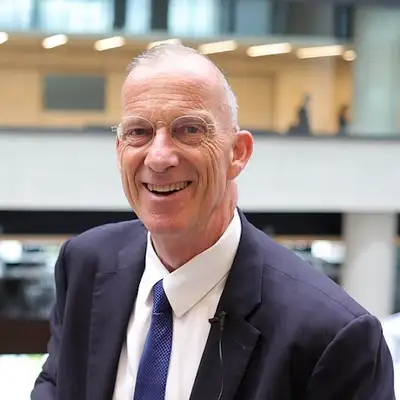
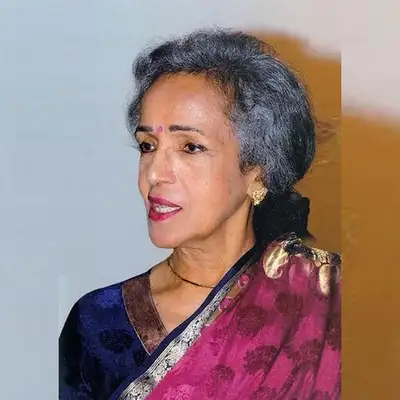
Michael Spence: Welcome to Faces of UCL, where we uncover many stories from around University College London. I'm Michael Spence, UCL's President and Provost, and I'm excited to bring you conversations with some of the remarkable people who contribute to our vibrant university community. This podcast's a window into the people and the stories that make UCL the special place it is. Today, I'm meeting a remarkable alumna of the university, Achala Moulik. I won't even try to begin to summarise some of the things that she's done. That will emerge during the conversation, but Achala, thank you very much for being here today.
[00:00:47]
Achala Moulik: Pleasure.
[00:00:49]
Michael Spence: You came to UCL in the early 1960s. What was that like?
[00:00:56]
Achala Moulik: Actually, it was 1959, Doctor. My father had been posted to the Indian High Commission in '55. Then he moved on to Rome, he joined the Food and Agricultural Organisation. My sister and I were both studying in Hendon County Grammar School. We did our O-Level, A-Level. The time came to decide where to go for university. The choices – thanks to father's position and income, otherwise, I don't think he could have afforded to keep us abroad – were whether to go to study in one of the good universities in USA or in England. Both my sister and I very vigorously insisted on studying in London University.
[00:01:44]
Michael Spence: You came to UCL. What was it like in the late '50s, early 1960s?
[00:01:51]
Achala Moulik: My sister, she was a year older than me. She was at London School. It was very vibrant, very socialist, slightly rebellious. By contrast, University College was very sedate and demure. We didn't have the rambunctious socialism that was there in LSE. It was very polite, and I studied under legendary names. I didn't know then they were legendary. It was sort of conservative, but I found a great deal of respect for civilisational diversity. I was warned that, my mother, my father's British friends said to me, it's very sedate, very British. You'd be a little careful not to show off there. But when I went, despite the outward encounters, behaviour, I was amazed by the enormous respect that the professors had, the teaching faculty had for all views.
[00:03:02]
Michael Spence: What did you come to study?
[00:03:04]
Achala Moulik: I came to study Economics at the Faculty of Political Economy.
[00:03:09]
Michael Spence: Were there many women studying economics in the late 1950s?
[00:03:12]
Achala Moulik: About four of us, not many.
[00:03:15]
Michael Spence: Out of a class of?
[00:03:17]
Achala Moulik: About 35. It was headed by the legendary G. C. Allen. My tutor was a remarkable lady whom I really loved, Dr Marian Bowley. Then we have the redoubtable Dr Georg Schwarzenberger to do international relations. It was very vibrant intellectually. But with a very, quiet, sedate exterior.
[00:03:43]
Michael Spence: That's not the story we like to tell of UCL. We always talk about UCL being this disruptive community. But what I hear you saying is that it was quiet, but open, both intellectually and culturally, is that fair?
[00:03:59]
Achala Moulik: Very. Very open.
[00:04:00]
Michael Spence: What did you take away from UCL? What difference did it make in your thinking or in your sense of yourself or your place in the world?
[00:04:10]
Achala Moulik: I was just 17 years and a half when I went for the interview and there were this formidable, cluster galaxy of professors. Asked me why I want to study economics, and I said why, and then one of them, I think it was Mr Sprouse, said in a slightly abrasive tone, why is India so poor? I said, I want to study economics to know what is the condition of the country and the world, half of it is struggling. So he popped this question. I said, I suppose it was, imperialism, colonialism. Then they all sat up. And then asked me to speak about it. Then they listened very politely, very nicely, and then halfway through, I realised that I'm jeopardising my entry here. Professor Allen said, very politely, very old courtier type. He said, Ms Moulik, did we do nothing good in India? Then I realised I better now retrace my steps and then I said, yes, you brought law and order, the entire legal system of India as is today. You brought us into the mainstream everything. Then Dr Bowley asked me, have you applied for any other college? Then I said, okay, that means I'm not getting this. I said, no, Madam, I haven't. I said, no, if I don't get to UCL I'll look elsewhere. Then, she said, where would you go to look for? I said, well, I have two choices, School of Slavonic Studies, and if I get a scholarship, maybe Moscow State University. Professor Allen said, he took off his specs, he stopped smoking on his briar pipe, and said [inaudible] to Marian Bowley: Dear me. We must save her from that fate.
[00:06:02]
Michael Spence: [LAUGHTER] So, you arrived – what impact did the UCL education have on you? It sounds like it was a stuffy old place, not a place that was open or respectful at all.
[00:06:17]
Achala Moulik: No, but the thing is, when I got the letter of acceptance, I just sat unbelieving because at that time, I don't know what the system is now, but at that time, they used to give it LSE or anywhere, you have to give 75, 85 or 90 like that. All the requirements. I got a new carte blanche letter saying, we're pleased to offer you a seat in the thing, no condition – however, this is a very British way of saying – however, we reserve the right to reconsider, should you fail your exams.
[00:06:55]
Michael Spence: And so, you didn't fail your exams. You did arrive. You were only one of four women in a class of 35 people.
[00:07:07]
Achala Moulik: And when I showed the letter, I sent a copy of it to my father, he, who had been part of the nationalist movement, he said, this is real British tolerance and democracy, I'm so glad you girls chose a British university. I don't think this would have gone down so well in any other country. Perhaps not even in India. Because in my professional career, when I read out the riot act, very frank, I was told to behave myself.
[00:07:36]
Michael Spence: Yes. You were allowed to not behave yourself at UCL?
[00:07:42]
Achala Moulik: No, I'm very, very unconventional, very nice, and everybody appreciated my openness, my candour. Mostly students, as well as the academic staff.
[00:07:55]
Michael Spence: You returned to India at the end of your time of study, did you?
[00:08:00]
Achala Moulik: Yes, I stayed one year in Rome with my parents, did a course in the Renaissance, being there in Rome. And Dr Georg Schwarzenberger, he asked me to do a postgraduate. He said you have done well in this paper and you obviously like the subject, so international relations and international law, you do it. He said, Don't go back to India to do civil service, my dear. You will have a hard time, stay here. I was in two minds. I really wanted to go back to UCL and do a postgraduate in that. But in those days, we were very obedient children. Father said, no, you have to sit for the civil service, so I did. So I came back two years later.
[00:08:44]
Michael Spence: Before we got back to India, just thinking about your time at UCL, what did you do when you were not studying?
[00:08:50]
Achala Moulik: The reason both my sister and I chose London University, apart from the university, the debates and the so many activities within the lectures and the debating club. It's also very – how shall I say – it's a citadel of cultural activities. We went to the Royal Festival Hall, National Theatre, Covent Garden, go to the museums. It's a world in itself, London.
[00:09:21]
Michael Spence: When you went back to India, you did the civil service career.
[00:09:26]
Achala Moulik: I actually sat for it in London. I sat for the exam in London. Halfway through, I was thinking to myself that let me not do it too well, because if I fail then I might stay on in London, get permission to do it. I thought, no, that'll be a disgrace. So I came back two years after graduating.
[00:09:50]
Michael Spence: You passed and you went home. Far from being the ignored person in the corner that your professor had predicted, you had really quite a remarkable career in the Indian Civil Service. Tell us something about that.
[00:10:05]
Achala Moulik: It was a very interesting career. It was in the beginning, I must say. You know, it was traumatic, coming back from London and UCL and Rome. And then suddenly you're landed in... the training period was nice in the Academy. You met 100 and other professionals. But there again, I chose, rather my father chose, that you should serve in a state other than your own. I come from Bengal. So to come to the state now called Karnataka, [then] was Mysore. It was very different from the world I grew up in.
[00:10:48]
Michael Spence: Yes.
[00:10:49]
Achala Moulik: That took a lot of adjustment.
[00:10:51]
Michael Spence: Yes.
[00:10:52]
Achala Moulik: There were times when I said, I'll give up and go back.
[00:10:55]
Michael Spence: Presumably you didn't even speak the local language?
[00:10:58]
Achala Moulik: Yes, I had to learn the local language.
[00:11:00]
Michael Spence: Yes.
[00:11:00]
Achala Moulik: It's a different world. I mean, no use denying. Today, so called, I don't like the word, but anyway, globalisation has brought people nearer superficially. But in those days, it wasn't. I mean, Europe was Europe, Western was Europe. There was this deep conservatism. Quite frankly, Michael, I found it... I had those 12 years in school and university in London. I had never felt alien. Never. Despite different civilisation, different language, I felt very much a part of that world, whether with the professors and teachers and fellow students. But when I came back, I began to feel maybe I didn't really belong here. Perhaps because from the age of five, I had lived abroad, I don't know. It took time to adjust to the new ideas.
[00:12:03]
Michael Spence: Was there a moment that you can remember where you thought, Oh, this has become home. I now really feel not just in India, but in this part of India, like I belong?
[00:12:16]
Achala Moulik: No, I think the nostalgia for London University actually went on for a long time. My sister was feeling it, she had married and settled near Kolkata, we were both having this. Then I began writing poetry. Poems about the past, the college. My father gave me a very sharp rebuke, saying your nostalgia is bordering on melancholia, stop it. But it was like that.
[00:12:47]
Michael Spence: Yes.
[00:12:47]
Achal Mulch: Until probation period was over, maybe the fact that it was a very dreary district town. But once I took charge as a subdivision magistrate, and I went to a beautiful seaside town Karwar, on the West Coast, things began to change then. But I felt very alone and adrift during the training period, and parents being far away.
[00:13:11]
Michael Spence: But you went on to have a remarkable career. You were Secretary of Elementary Education and Literacy, you were Assistant Director and Director of the General Archaeological Survey. You had quite a remarkable career in India. As you look back, what was the role that you either enjoyed most or of which you are most proud, where you really thought you made a difference?
[00:13:34]
Achala Moulik: The job which I enjoyed most was, though Education Secretary of India was the most prestigious, but the job I enjoyed most assignment was Director General of the Archaeological Survey of India.
[00:13:46]
Michael Spence: Tell me about that role.
[00:13:48]
Achala Moulik: I went there as Additional Director General, and that was mainly looking after administration. But the Secretary of Culture at that time, he said, you must get acquainted with the work there, and I became very deeply involved in the conservation, the restoration, epigraphy, things which I had never heard about or known about. Initially, you see where culture is such a big industry. I had gone travelling and seen Florence, Venice, all the cultural areas, heritage areas. To see, to travel from India, then I began to realise what India was. It was about 50 years on. From the tip of India, Kanniyakumari, which the old name was Cape Comorin, and from there right up to Kashmir, it was like travelling across a whole continent. Then I realised that how much civilisational diversity there is in India.
[00:15:03]
Michael Spence: Yes. It's a remarkable country.
[00:15:05]
Achala Moulik: Each region is so different from another.
[00:15:09]
Michael Spence: Yes.
[00:15:10]
Achala Moulik: The architecture, the script, their emotional content, their traditions. It was a unifying thread in this archaeological survey. As I went to do the restoration of Angkor Wat in Cambodia. It was, to see it to retrieve pillars and broken columns from the jungles, tropical jungles, it was a massive work which the archaeologist did. I was just a spectator. I used to record and send the reports to the Foreign Ministry and Culture Ministry. But when I saw it being done, it was breathtaking.
[00:15:57]
Michael Spence: Having spent 12 years in the UK and experiencing a kind of culture shock when you first came home and went to Karnataka, this job really enabled you to recover a sense of the depth and richness of the history?
[00:16:16]
Achala Moulik: I began to identify with this vast land.
[00:16:20]
Michael Spence: Yes.
[00:16:21]
Achala Moulik: And so many different... Since I had not grown up in India, I didn't belong particularly to this state, which is there very much that you belong to this state, you carry the traditions. I was Indian. I wasn't Bengali. To see this India opening up was a revelation. It was so much an echo of what our gracious poet, modern poet, Rabindranath Tagore.
[00:16:49]
Michael Spence: Yes.
[00:16:49]
Achala Moulik: He wrote a wonderful poem. Remarkably long before the word, the term which is used now in Indian politics, unity and diversity.
[00:17:00]
Michael Spence: Yes.
[00:17:01]
Achala Moulik: Rabindranath had actually said this at the turn of the 19th, 20th century. It's a very moving poem. India being the seashore of humanity.
[00:17:12]
Michael Spence: Yes.
[00:17:12]
Achala Moulik: And all the people who came.
[00:17:14]
Michael Spence: Also a UCL Alumnus.
[00:17:17]
Achala Moulik: Pardon, yes, I know. Yes, and in fact, to digress, I was so moved in 1961. I was then just gone to the second year. It was the centenary of Tagore's birth.
[00:17:31]
Michael Spence: Yes.
[00:17:31]
Achala Moulik: They put up a beautiful plaque where he studied. I think studied under the great Professor Morley.
[00:17:39]
Michael Spence: Yes.
[00:17:40]
Achala Moulik: You know that the great Nobel laureate, Rabindranath Tagore, was a student of this faculty. Every time I would go there, I would do a namaste.
[00:17:50]
Michael Spence: We tried to save you from the Soviets. But talking about awards and honours, they gave you the Pushkin Medal. You have this whole other life, of course, as an author, not only as a poet, but also as a novelist. Tell us the story about the Pushkin Medal.
[00:18:06]
Achala Moulik: I used to write, the cultural history of various countries fascinated me. I wrote one on the Golden Age of Spain, and then I wrote about a History of Italian Literature, which was my father's, one of his best subjects. My first book was on the history of Russian literature from Pushkin to Yevtushenko, which was not very popular then, and I thought in India, people should know. It was published by Moscow University. I kept on writing about Russia. Then we were watching this lovely film, whether it's the film so much, or the fabulous music which accompanied Shakespeare in Love. My husband and I were watching, I still remember a stormy monsoon afternoon, on TV. Then after it finished, I told my husband, this is a bit similar to the story of Pushkin and Mariya Raevskaya [sic]. Very similar to Shakespeare and Viola. He said, Why don't you write a play? I said, I've never written a play. I don't. I can't. It's not my media. But he goaded me on and I wrote this play. He saw the first draft, and soon after he passed away. For a year, I couldn't touch the script. Then I met somebody who said, do it. I wrote the play, and I sent it to the Russian Embassy, are you interested? They said, yes, we'll have it staged in Moscow. Then I had to find a director. Fortunately, my old boss, Mr Ghosh, he was a well known theatre personality. He said, I'll do it. So there we were, performing it in Moscow and Petersburg and Delhi, Bangalore. The Russians, they worship Alexander Pushkin. We have airports, you have airports named after Dulles, you have an airport named after Indira Gandhi. Great people, no doubt. Do you know the Sheremetyevo Airport? When I saw it this time when I went for the Leo Tolstoy Prize, Alexander Sergeyevich Pushkin Airport.
[00:20:25]
Michael Spence: Yes.
[00:20:25]
Achala Moulik: They love airports. I think that play won their hearts. I was informed that, we're considering you for Pushkin Medal. I said, yes, [inaudible]. It was a very intimidating experience to go. They're sitting there with President Putin, who was then Prime Minister. Changed roles with Mr Medvedev, who was then the President Metropolitan of Moscow, all five star generals. The Russian ambassador in India was a good friend, and he was an Indologist, also. He said, Achala, you are going to speak in Russian. I said, No, I've forgotten everything. He said, no, you have to brush up. I give you two weeks. You have to come back and speak to me in Russian.
[00:21:20]
Michael Spence: Hang on. What do you mean, I'd forgotten my Russian? When did you learn Russian?
[00:21:25]
Achala Moulik: When I was in school. That's in 1957, London, this is the great thing about London. You wouldn't know whether it's Moscow or London. They were celebrating the 40th anniversary of the Revolution. Moscow Art Theatre, Bolshoi Ballet, all the state Georgian company. London was awash with all this Russian culture. It was so moving to see Londoners standing in the rain just to get a ticket for Bolshoi Ballet or Moscow Art Theatre. I also caught the contagion, and I said, I must learn Russian. Then I said, no after learning Kannada and Hindi, I've lost my touch. I can't learn, go on with Russian. He said, no, you give me the speech. We'll get it modified. I said have to be very brief, your Excellency. The day before setting off, he sat there and he said, now, speak. I spoke and I said, no, I can manage only five minutes. Rest of it, I must speak in English. He said, okay, that's done. They put an interpreter, and it was overwhelming to speak about Pushkin and Tagore and India and Russia there.
[00:22:39]
Michael Spence: Yes. What a wonderful story. There's been poetry, there's been drama I now learn, but there's also novels. The most recent one is set in UCL and LSE. What made you at this point in your writing career decide to set a book here in London and particularly at your alma mater and that of your sister?
[00:22:57]
Achala Moulik: As you grow old, and I am old, then you start thinking of the happy aspects of your life. This story of my sister was there, very much so. She could have married an Englishman. Her story is slightly modified. Then University College, there was a similar person I knew, a cousin. I think the love for London University never left me. It has always been there, and part of it was also that the encouragement I got, for Dr Bowley knew, I used to go for Slavonic studies and everything. The only thing she said is, don't neglect your economics doing this. London and England was probably the best years of my sister's and my life. So much, so, Michael, that in the middle of it all, halfway through, I wrote a novel which became this theme of encounter between India and England, without all the political abrasions and antagonisms. It's called The Conquerors. It's the story of an Indian family, what they call the zamindars, the landowners, which is what my mother's family was. On the banks of the Ganges, Ganga, and an English family, which was partly there also, they had connection. It's a family chronicle of two families, an English and a Bengali Indian, living together and coming into contact through three generations. I tried to encompass this whole encounter between Britain and India in this novel.
[00:24:58]
Michael Spence: So much of your story is a story of encounter between Britain and India. UCL is proud to have been a small part of that story.
[00:25:10]
Achala Moulik: I won't say a small part, Michael. I think it is what shaped me, truly.
[00:25:16]
Michael Spence: Well, thank you very much for talking to me today, and people will understand why it was so difficult to introduce you. Do I say Achala Moulik, successful civil servant, poet, archaeologist? Look, thank you very much. I really appreciate you taking the time.
[00:25:31]
Achala Moulik: It was wonderful speaking to you. Thank you.
[00:25:33]
Michael Spence: Thank you. That's it for today, but next on Faces of UCL, we're bringing you a conversation with Professor John Hardy, whose research has led to breakthroughs in our understanding and treatment of dementia.
Creators and Guests